

Thai Smiles Japanese Styles

On July 7th each year, Japan celebrates Tanabata, also known as the Star Festival. During this time, shops across Japan are beautifully decorated with Sasa bamboo branches (笹飾り: Sasakazari) and colorful paper strips called Tanzaku (短冊), where people write down their heartfelt wishes. Other colorful paper decorations, each with special meanings, are also displayed. Today, UFM Fuji Super invites you to explore the meaning behind these Tanabata decorations, so you can enjoy and appreciate this joyful festival and the richness of Japanese culture even more.

History
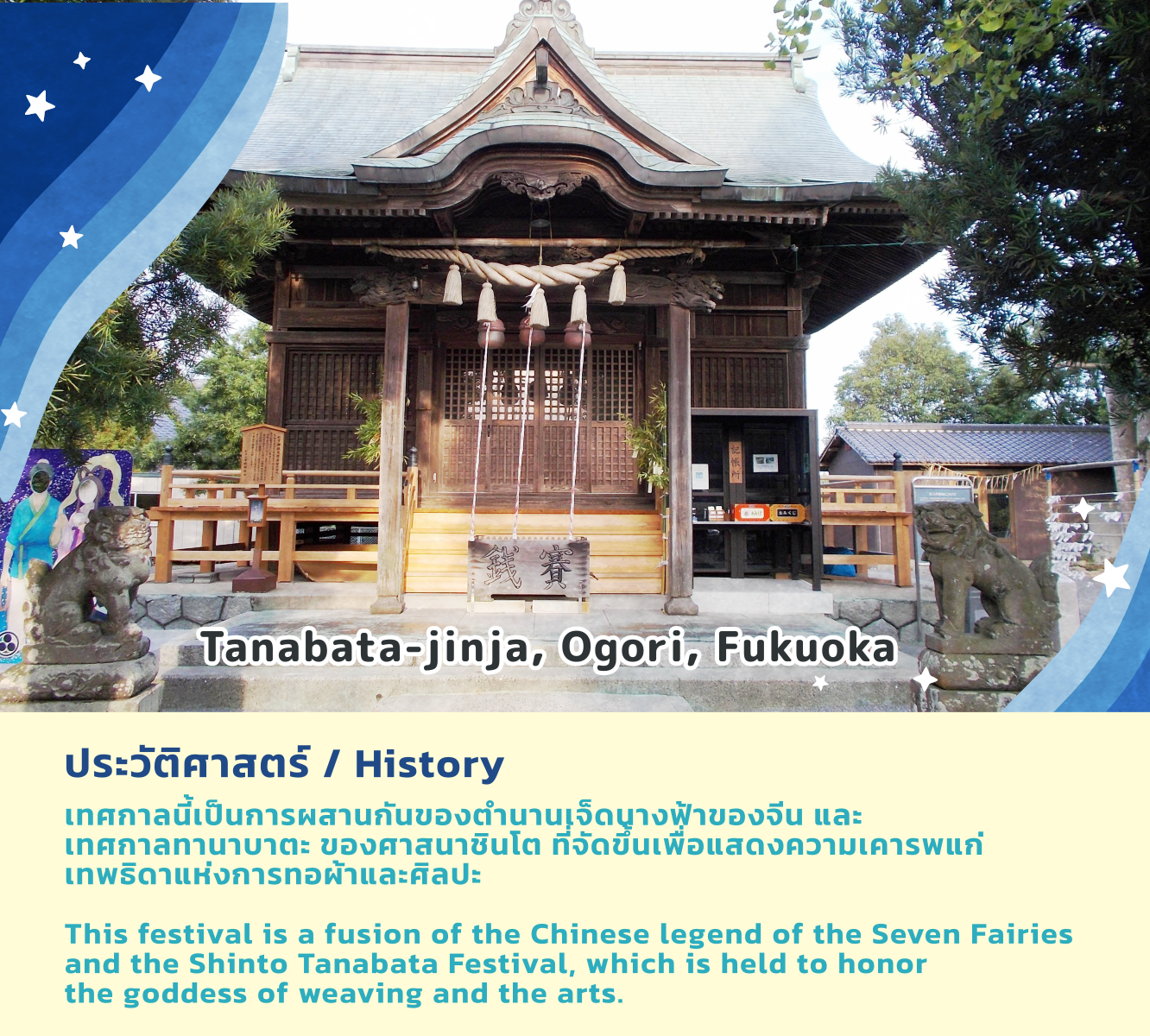
It is believed that the Tanabata legend is a blend of Shinto beliefs and ancient Chinese folklore. In Shinto, the festival is connected to the weaving goddess Tanabatatsume (棚機津女), who is enshrined at Tanabata shrines. This merges with the Chinese story of the "Seven Celestial Maidens," where a skilled and beautiful heavenly weaver falls in love with a human man. She marries him and bears a child, but the God of Celestial eventually takes her back to heaven, separating her from her family across the Milky Way.
Decorations
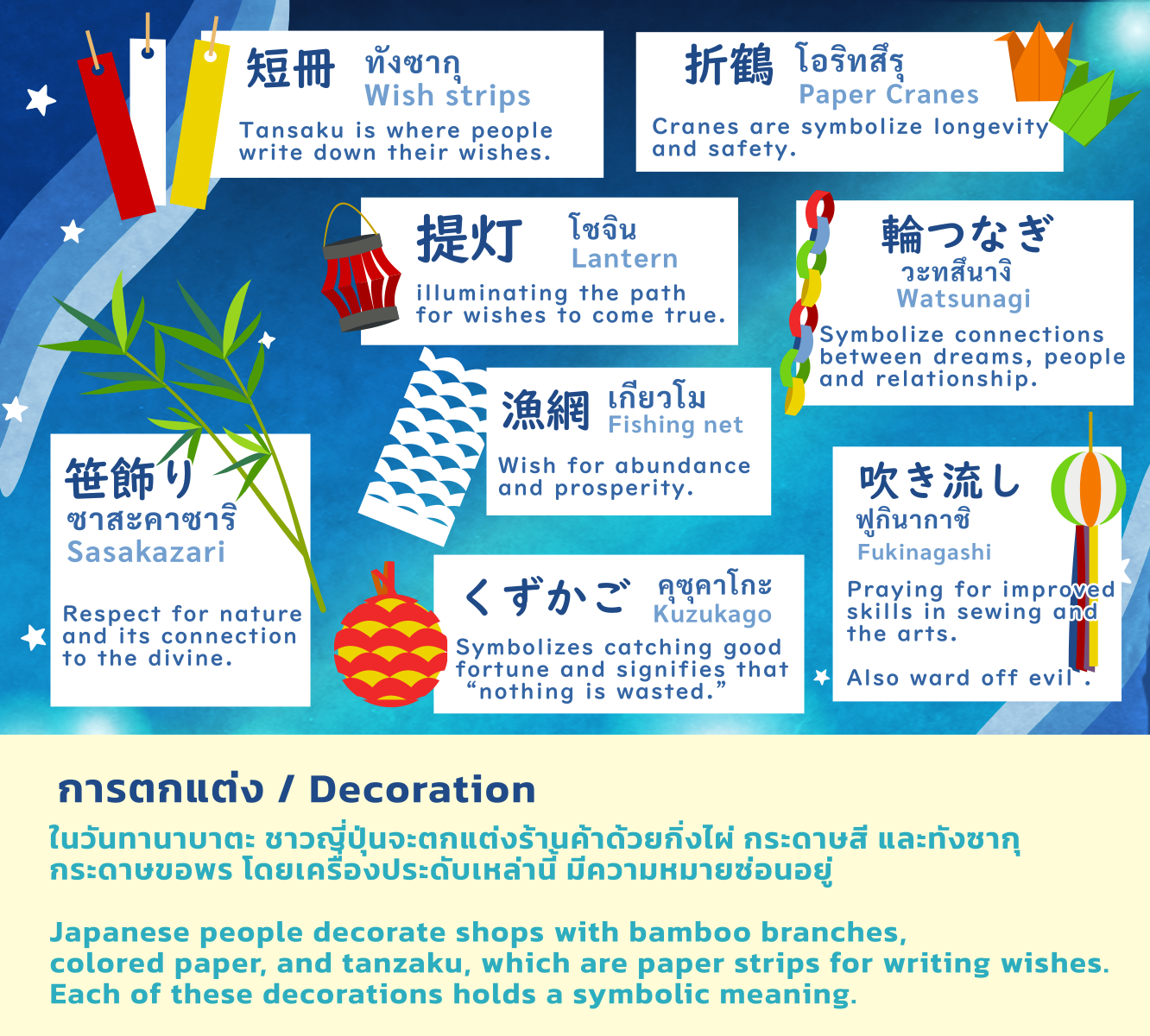
短冊 (Tanzaku) – Wish Strips
Each color of Tanzaku paper represents a different kind of wish:
笹飾り (Sasakazari) – Sasa Bamboo Decorations
Sasa bamboo, a type of dwarf bamboo native to Japan, holds auspicious meaning in Japanese culture. According to Shinto beliefs, deities are fond of Sasa bamboo for its vibrant life force and the calming rustle of its leaves in the wind. It is also believed to have the power to ward off evil. During the Tanabata Festival, people hang their wishes on Sasa bamboo branches so that the gods can easily see them. The use of Sasa bamboo reflects a deep cultural respect for nature and its connection to the divine.
くずかご (Kuzukago) – Paper Scrap Basket
Even leftover craft paper can be transformed into a charming decoration. The Kuzukago is made by folding paper into a mesh bag, forming a basket that can hold light items. Colorful paper balls made from scraps are placed inside and wrapped in the mesh, creating a vibrant and unique ornament. The mesh symbolizes catching good fortune, while the Kuzukago itself signifies that “nothing is wasted.”
漁網 (Gyōmo) – Fishing Net
These brightly colored long paper decorations represent fishing nets and, in some regions, the Milky Way itself. Sometimes adorned with stars or leaves, Gyōmo decorations are prayers for fishermen to have a bountiful catch and a wish for abundance and prosperity.
折鶴 (Oritsuru) – Paper Cranes
In the Tanabata legend, paper cranes helped form a bridge across the Milky Way for the weaving princess and the cowherd to reunite with their children. Cranes also symbolize longevity and safety in Japanese culture. Hanging paper cranes represents a wish for a long, healthy life for loved ones.
吹き流し (Fukinagashi) – Paper Streamers
Traditionally made with colorful ribbons, a paper ball, and a sewing needle, these were offerings to the weaving princess, praying for improved skills in sewing and the arts. Today, they are made from vibrant paper and are also thought to ward off evil with their five symbolic colors.
提灯 (Chōchin) – Lanterns
Lanterns represent light and are believed to drive away evil while illuminating the path for wishes to come true. They also help ensure that the gods can read our wishes at any time of day.
輪つなぎ (Watsunagi) – Paper Chains
These linked paper circles symbolize relationships, connections between dreams and people, and the journey of wishes to the Milky Way.
Food
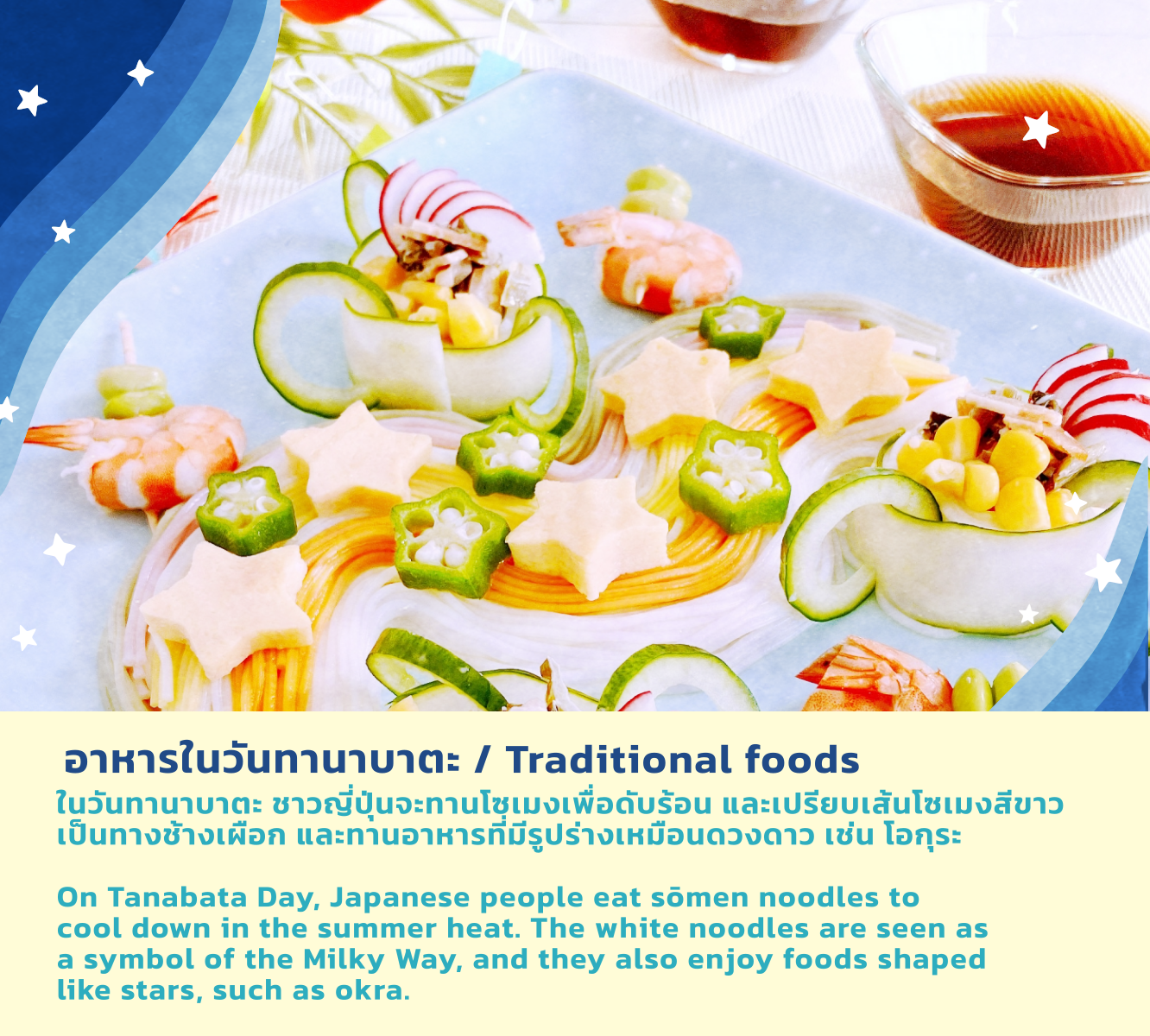
In addition to decorating shops with Tanabata ornaments, people in Japan also celebrate by dressing in colorful yukata, eating sweet watermelon, and watching fireworks. This season is also packed with summer festivals, making it a great time to immerse yourself in Japanese culture and seasonal flavors. Try traditional summer foods like Japanese tomatoes, large eggplants, Japanese cucumbers, sweet corn, and cold sōmen noodles for a full taste of summer in Japan.
Visit any UFM Fuji Super branch to find trusted, authentic Japanese products and enjoy the essence of Tanabata!
380 views